


I used to read hard things front to back. Every page, no shortcuts. I almost never finished. The material wasn’t always too dense. The order I read them in was wrong.
This method is for nonfiction. It is for the papers, chapters, and manuals that you read because you need to understand a new concept or a skill. It is not for stories. You do not want to “skim” a novel and ruin the ending. But when you are learning a difficult concept, reading front to back is a trap.
People compare learning a tough subject to solving a puzzle. The comparison misses a hard part. With a puzzle, every piece is already on the table. You just figure out which one goes where. With a difficult concept, the pieces aren’t handed to you. You have to decide which ones matter, and then work out how they fit.
Reading front to back assumes all the pieces matter, in the order the author stacked them. That is how you end up with a bookshelf of half-read chapters and a head full of the first few pages or paragraphs of other people’s arguments.
The way I read now looks like mapmaking. You don’t understand a city by walking every street in number order. You guess what the territory is, you fly over it to see its shape, you hike only the parts relevant to where you’re going, and then you draw the map from memory so it’s yours.
Here are the four moves. I use them on papers, chapters, manuals, and anything dense enough to be scary.
Step 1: Guess the territory
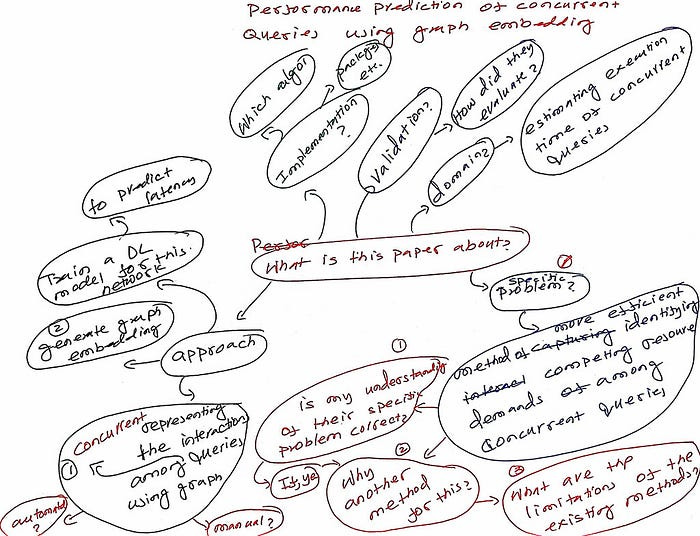
Before reading anything, look at the title and guess what the material is about. Write the guess down. A few lines are enough.
Then write the questions you’d want answered if your guess is right. These first questions are anchors: they catch the first wave of information while your understanding is still shallow. As you read, you refine them, and those refined questions are where the real learning happens.
A wrong guess is still better than no guess. You corrected your model, and you learned exactly where it broke. That’s faster than drifting through a chapter with no model at all.
Step 2: Fly over the landscape
Now preview the whole thing, quickly. Don’t read. Skim. Grab the landmarks: title, abstract, introduction, conclusion. Pictures, captions, and section headings. You’re looking for the shape of the piece and the parts that matter for what you need.
Think of it as looking at a city from altitude. You don’t study individual houses. You see where the main roads run and which neighborhoods you actually need to visit.
This is also when I draw my mindmap. A blank sheet of paper, turned sideways so it’s wider than it is tall. One question at the center, like “What is this paper about?” As I skim, I write keywords and short phrases around it. By the end of the preview, I have a skeleton of the material in my own words.
Step 3: Hike the peaks
From the satellite view, you know which sections deserve your time. Go straight to them. Read with a specific question, or better, a project you’re actually working on. Once you find the answer you’re looking for, highlight it and stop. The parts of the material that aren’t useful to you right now are simply off your route.
I used to read with no purpose at all, hoping it would stick. My schedule is too tight for that now. Reading everything is the slowest way to learn. Reading what answers your question is how you finish things.
When a section fights back, don’t reread it harder. Try these instead:
Copy the difficult lines word for word. Writing them out forces your brain to actually see the structure.
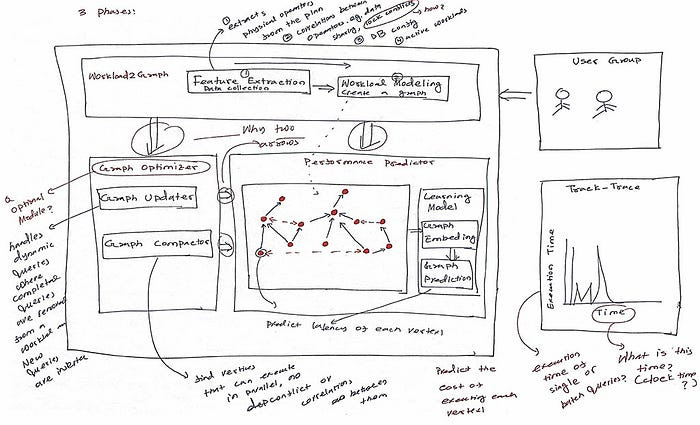
Redraw figures in different colors. The act of drawing pushes your eye through every detail.
Color-code diagrams. Use red for parts you don’t understand, and write your questions right next to them.
Step 4: Draw the map from memory
The final move is the one many skip, and the one that tests you. Put the material away. Close the tab. Now write the summary from memory, in your own words.
If you can’t write it, you haven’t learned it. The parts you can’t reconstruct are the gaps in your map.
I write my summaries with three pens. Blue for the summary, red for questions, purple for new ideas. When a question or an idea pops up, I switch pens, capture it, and switch back. I don’t chase answers while writing. I just mark the spot on the map so I can come back to it later without breaking my flow.
Reading is selection
In a knowledge economy, your career runs on learning difficult things quickly. Time is short, so the whole game is selection: choosing the material that deserves your attention, then making sure it stays with you.
Guess the territory. Fly over the landscape. Hike the peaks you need. Draw the map from memory so the understanding belongs to you.
Try it on one thing this week. A paper, a chapter, or a manual you’ve been avoiding. Then reply and tell me which move felt different.